Authentic Hakata Tonkotsu at Danbo Ramen in Dazaifu, Fukuoka
Intro
Meow meow everyone, it’s me, Mydondon~ I’ve eaten so much ramen here in Taiwan that I figure it’s about time to head back to where ramen was born, right!? So! Today we’re going on location! I made my way to Fukuoka, Japan, near Dazaifu, to slurp down a bowl of authentic Hakata tonkotsu ramen.
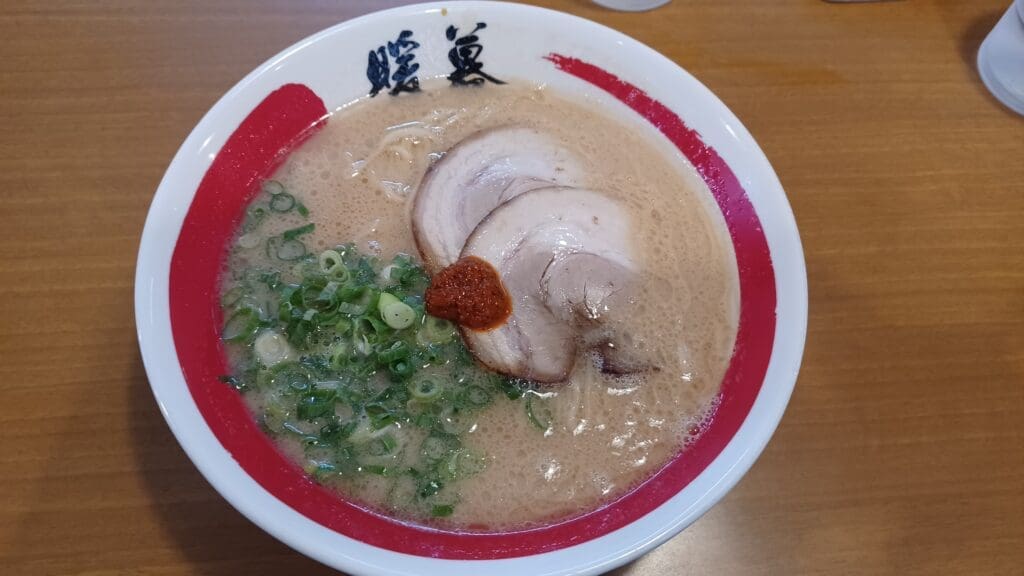
But before we dig in, let me give you a quick rundown on Hakata ramen. Hakata ramen is a bowl made by boiling pork bones, salt, and seasonings over high heat. It’s usually paired with thin noodles so the surface of the noodle soaks up plenty of broth. Even on a hot day, if you can suck up a mouthful of that silky-smooth soup and slowly chew through the duet of tonkotsu and spices in your mouth, well, that’s one of life’s great joys.
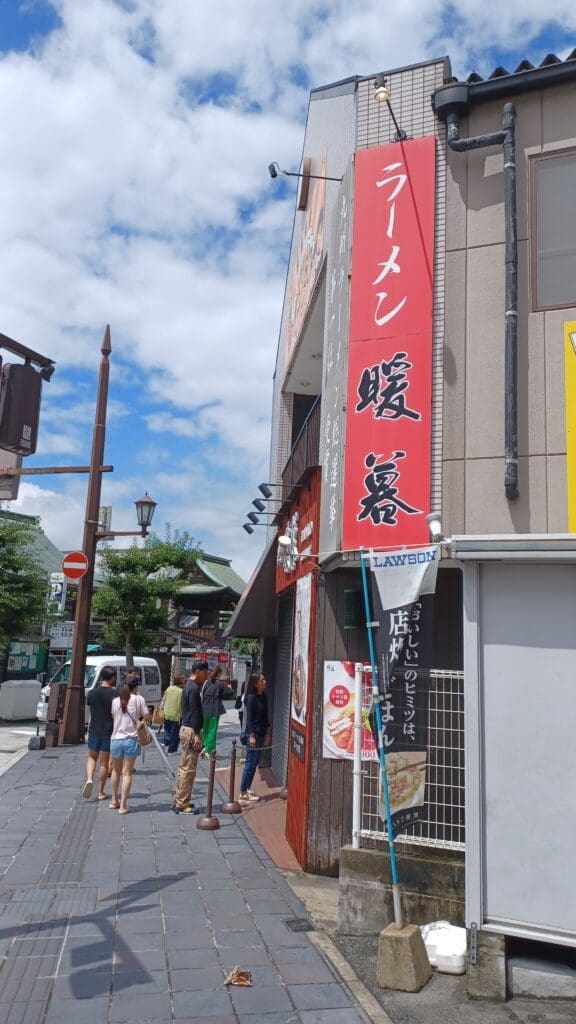
Where Danbo Ramen is, plus the details
Danbo Ramen on Google Maps: https://goo.gl/maps/mSKNaidvzDtvBBcWA
“Ramen Danbo” sits diagonally across from Dazaifu Station. We arrived around 11:00, but the shop said they were still getting ready and weren’t open yet (by then it was already 30 minutes past the posted opening time), so we wandered around nearby Dazaifu for a bit and then came back. I’ve also written a separate piece introducing Dazaifu Tenmangu Shrine, so any of you who are interested can keep an eye out for that post coming up in a few days. I’ll get it out as fast as I can (・~・)
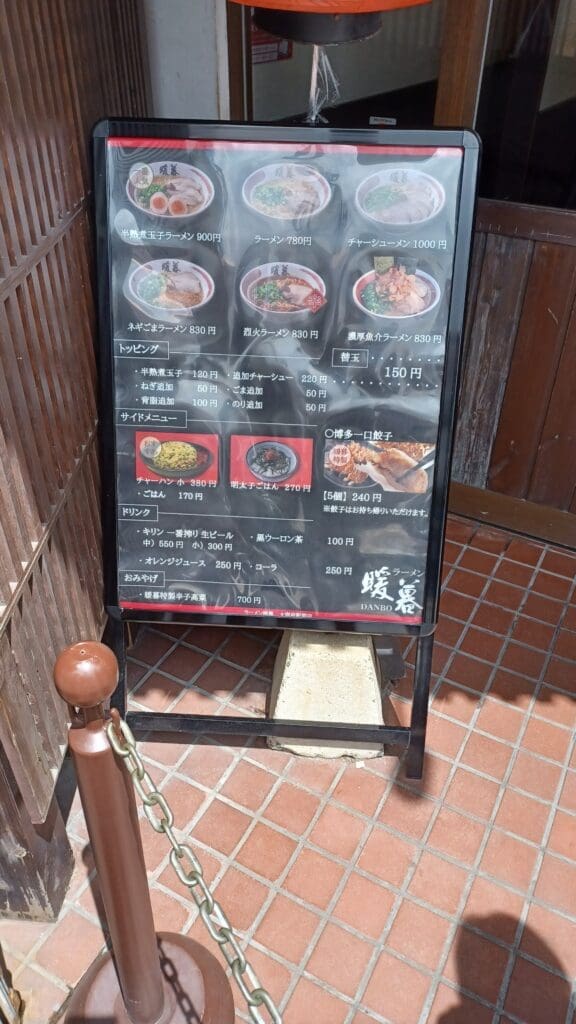
Anyway, after our little stroll we headed back to Danbo Ramen, and by then the shop was ready to open. It was actually almost full already, but luckily we could grab a seat right away without lining up. Ordering inside is done through a ticket machine, and there are no family-style private booths, just one long L-shaped counter for seating. I ordered the chashu ramen, which, as the name suggests, is the bowl loaded with extra chashu, six slices in total, a full four more than everyone else gets. But personally, if you’re not an especially big fan of chashu pork, you can just go with the signature ramen. That’s because every bowl actually shares the same broth base. The only differences are how much sauce gets added on top and whether or not there’s any chili.
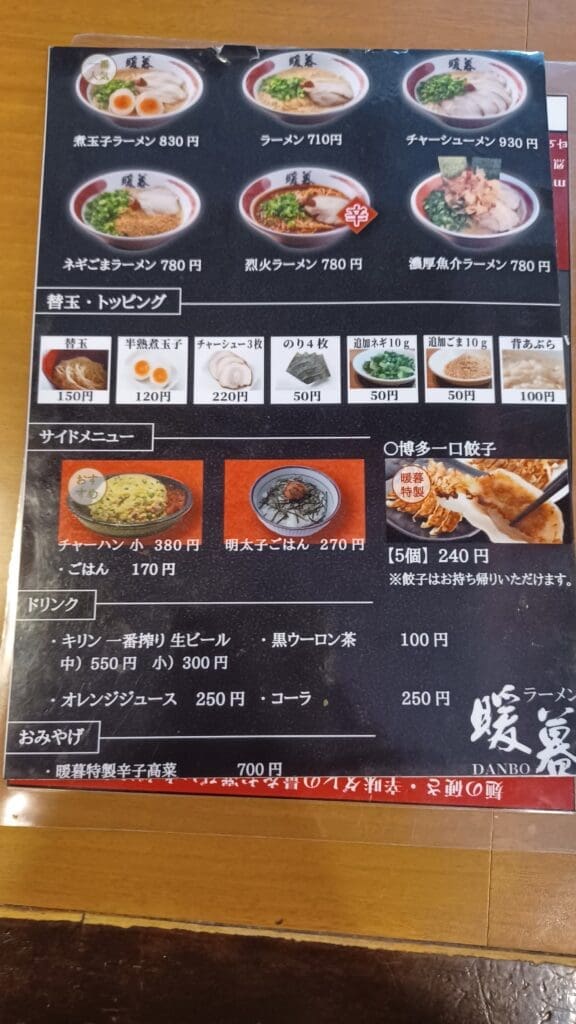
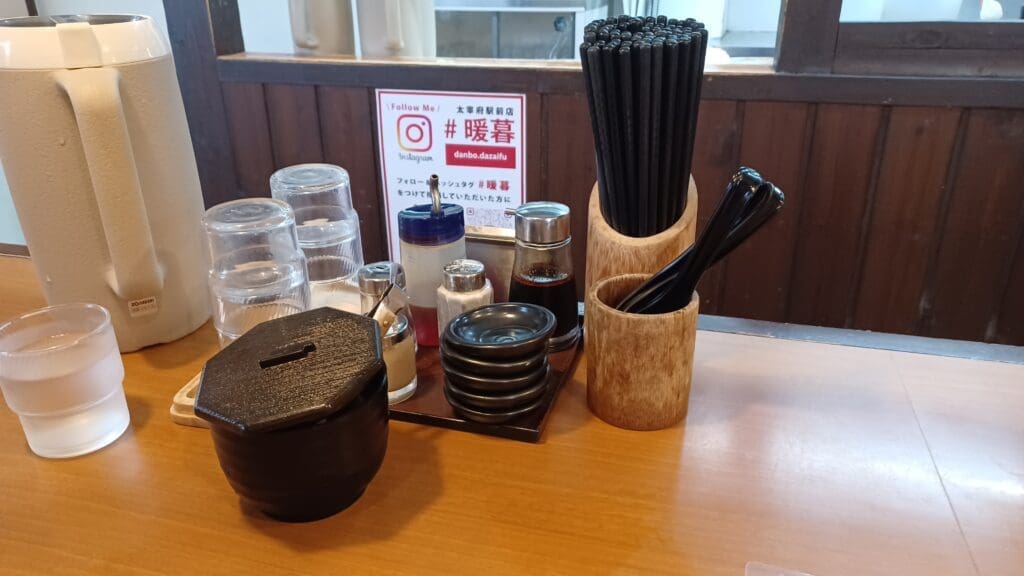
A look at the different ramen options and Danbo’s clever little touches
For example, the “Blazing Fire” bowl is basically the spicy version of the signature, and the chashu one is just the signature with more meat. As for the rich seafood (gyokai) one, since I didn’t try it today I’m not sure whether it’s a ramen with a different broth. If any of you have had it, feel free to drop a comment below and let me know!
I also want to give them a special shout-out for being so considerate toward foreign customers. How so? Because most of the words and audio prompts you’d need to place your order come in Simplified Chinese, English, and Korean. Honestly, that’s a really thoughtful touch. You don’t have to keep waving your phone’s translation camera around to scan everything, and you won’t accidentally order the wrong thing. That’s a huge plus.
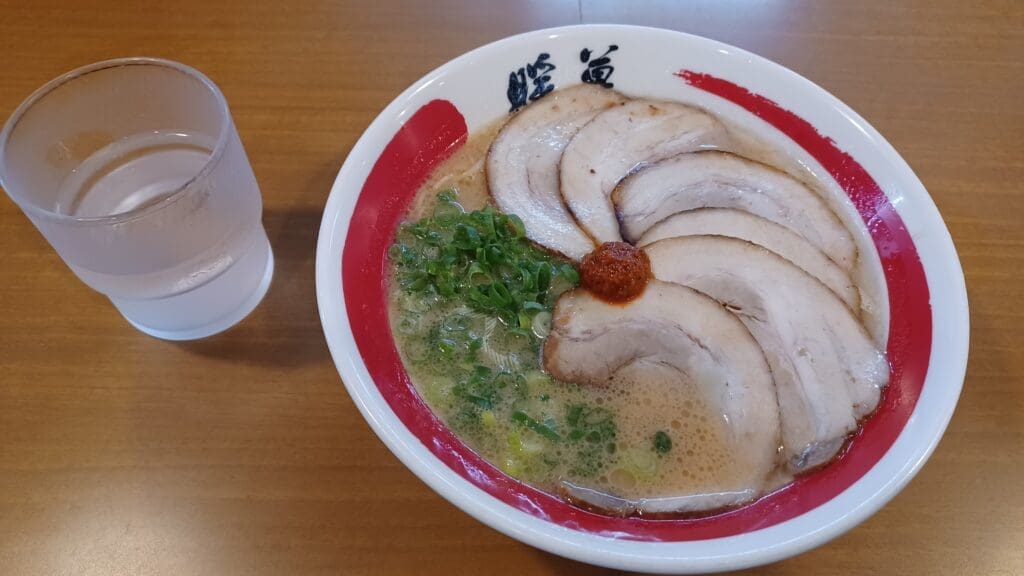
The broth, and my overall take on the chashu ramen
Alright, let’s give it a taste! I started by sipping the broth on its own. It tastes a lot like proper, traditional Hakata ramen, with the tonkotsu carrying the main key and salt playing the supporting role. It’s a bit plain, but it’s not punishingly salty. If anything, I’d say the flavor is a touch on the light side. That sauce in the middle has a slight kick of heat, but unless you go looking for it you won’t really notice any spiciness. It comes across more as a “seasoning” flavor.
Once you stir it into the soup, the broth turns a faintly crimson color (this is even more obvious in the Red Fire bowl), and the broth picks up a very subtle extra layer of flavor, though the whole thing also gets a bit saltier. Cooking the broth down like this isn’t a bad idea, but without any toppings it does feel a little one-note. And honestly, if you don’t go out of your way to add extra toppings, it ends up pretty boring. My guess is the shop does it this way to keep costs down. All I can say is, it’s not for me. When you order, you might want to add some nori or a soft-boiled marinated egg, and if you’re short on cash, a bit of pork back fat works too. At least it gives the flavor a little more variety.
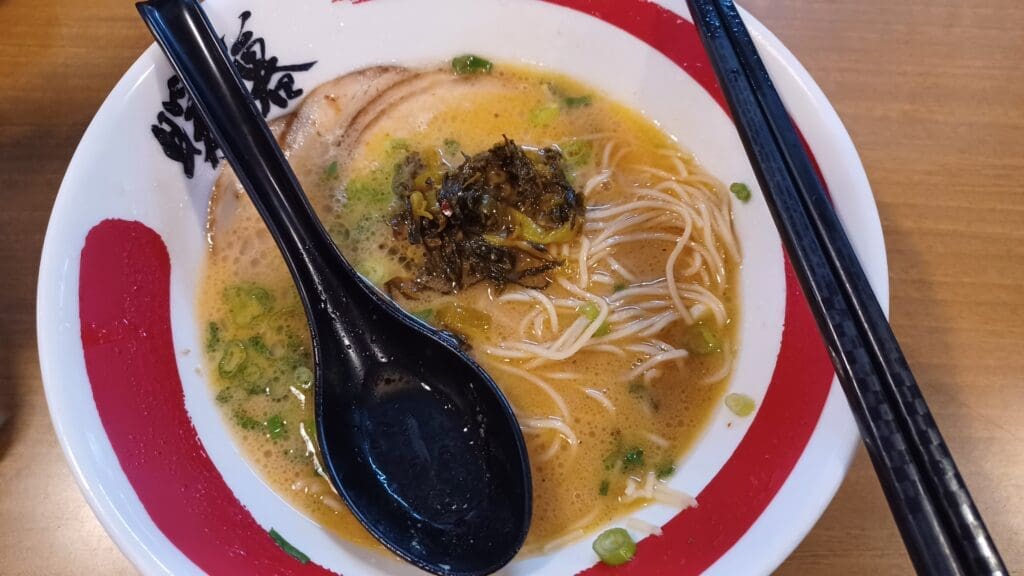
I also want to call out the noodles. I’m not certain, but they felt super thin to me. Honestly, just a tiny bit thinner and they’d basically be Taiwanese misua. That keeps the noodles from being firm enough. I’d already picked the medium-firm option and still found them on the soft side, so if you’re a firm-noodle person like me, definitely go for the firmest option.
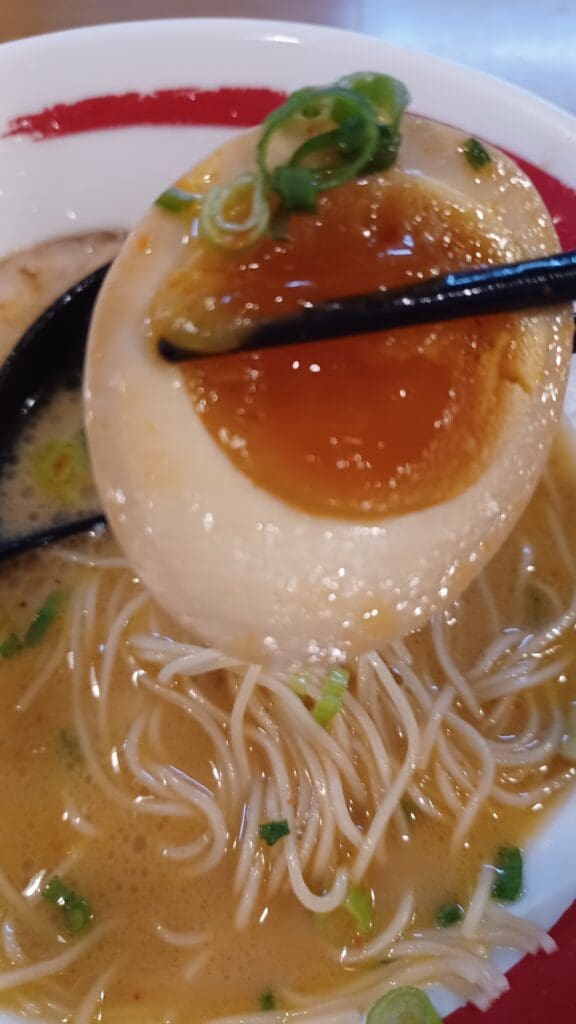
The soft-boiled egg doesn’t carry a strong eggy smell, and it isn’t overly sweet or heavily seasoned, just a gentle hint of egg flavor that forms a striking contrast with the broth. The chashu is half-fatty, half-lean, with a faint hint of charred, fire-grilled aroma on the surface, but nothing especially remarkable, so it doesn’t really leave a lasting impression.
Okay, let me wrap things up. Overall, Danbo Ramen doesn’t have a ton of standout moments. It’s a very simple bowl of ramen, plain and unfussy but still up to a solid standard. It’s a great spot to swing by if you happen to be visiting the area! Alright, thanks for reading, everyone. If you enjoyed this post, there are another 25 Taiwan ramen articles down below for you to browse at your leisure! And if you want to see more, feel free to hit that follow button and help me see whether I can break 1,000 followers this year! Love you all ❤️