How Many Schools of Ramen Are There? What Makes Each Shop’s Ramen Different — and Where Did They All Come From?
Heads up — this post is still a work in progress, this is an early preview!
There are all kinds of ramen out there in the world, and each kind splits off into several different schools. So just how many ramen schools are there? Over roughly 150 years of evolution, in a fiercely competitive scene with countless shops all vying for attention, ramen has slowly branched out into a whole range of distinct flavors — to the point where even two different branches of the same shop can serve up completely different tastes and characteristics. If we really tried to break it all down in detail, we’d never finish, but if we just talk about the broad schools, we can still sort ramen into a few different families. From Rairaiken’s “Tokyo shoyu ramen” — the very first to appear — to the rarely-seen “Tokushima ramen,” here I’ll share all the different schools of ramen I could dig up online.
1. Iekei Ramen (the direct lineage, a.k.a. Yokohama Iekei Ramen)
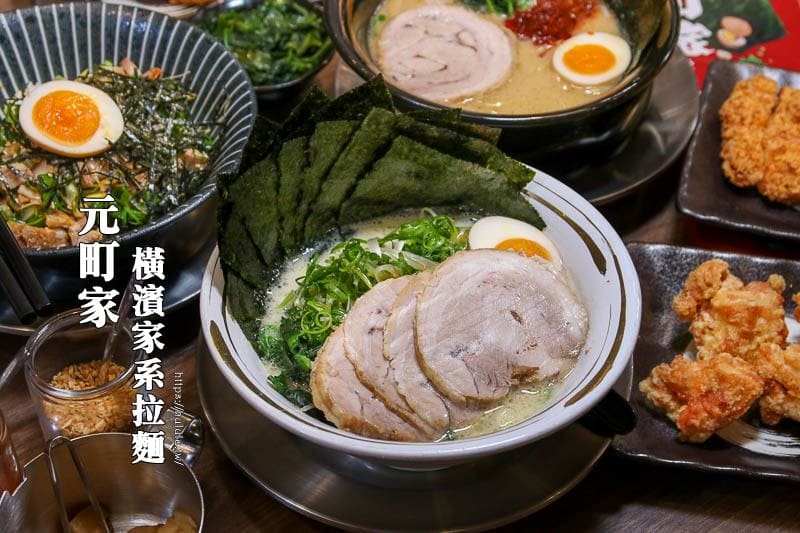
The Yokohama Iekei school of ramen usually has the following features:
- A soup base built on a rich, creamy tonkotsu (pork bone) broth
- Seasoned with soy sauce as the tare base
- Usually paired with thick, chewy noodles
- The toppings are typically chashu, spinach and nori, and some Iekei shops in Taiwan also serve quail eggs.
- Customers can adjust the richness of the broth and how much fat goes in
- A drizzle of chicken oil for seasoning (which, for some Taiwanese diners, is an absolutely essential part of the experience)
As for where Iekei ramen comes from, its roots can be traced all the way back to 1974, and it first caught on with the Kanto region as its center. “Yoshimuraya” is regarded as the founding shop of Iekei ramen. One day, Yoshimura, the shop’s owner, wondered, “What would happen if I mixed Kyushu’s tonkotsu broth with Tokyo’s soy sauce broth?” — and to his surprise, that one experiment blew him away. The result was so jaw-droppingly delicious that not only did it sell like crazy, but many customers who tried it wanted to become his apprentices. Like most ramen shops, the Iekei tradition holds firmly to maintaining its flavor and standards, and authentic Iekei shops insist on using only noodles made by “Sakai Seimen.”
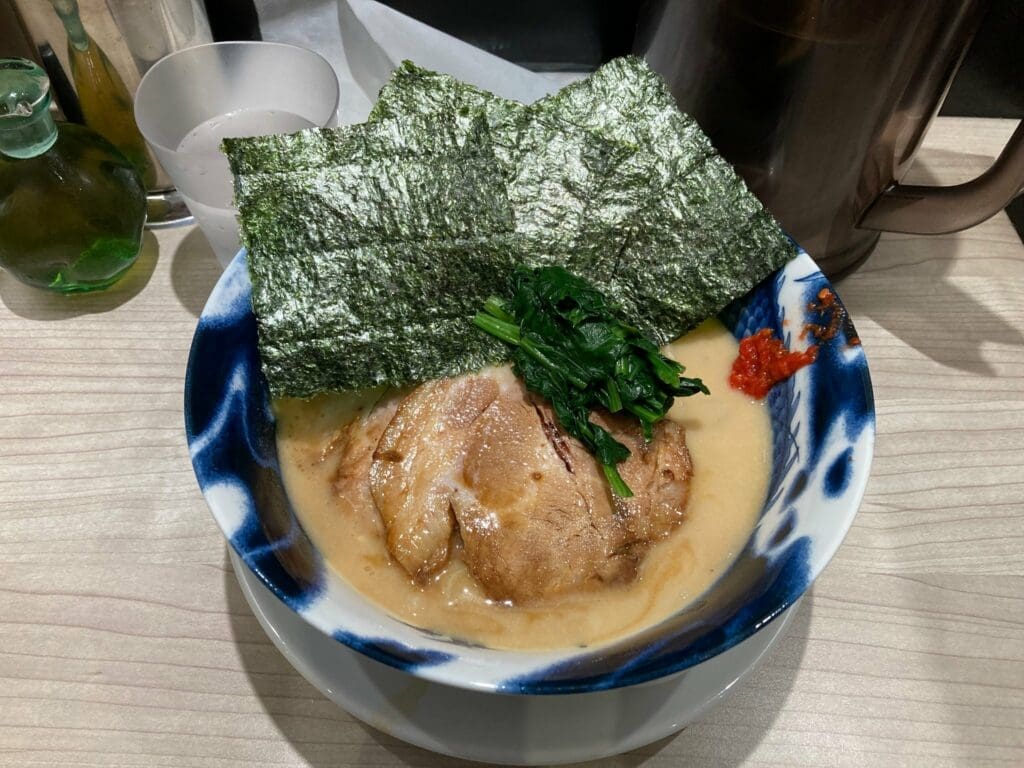
Those apprentices who went off to open their own shops mostly took on the “XX-ya” name, which is exactly how the Iekei reputation spread far and wide. But as time went on, plenty of shops also developed their own original takes on Iekei ramen — Taiwan, too, has a whole bunch of different Iekei ramen shops, each with its own character, like Pengxing’s “Linbei Iekei,” Yamashita Park’s “Yamashita Ramen,” and Ramenya’s “Hsinchu Iekei Ramen.” Next time you come across an Iekei ramen shop, why not step inside and give it a try?
2. Jiro-kei Ramen (the “real man’s” ramen)
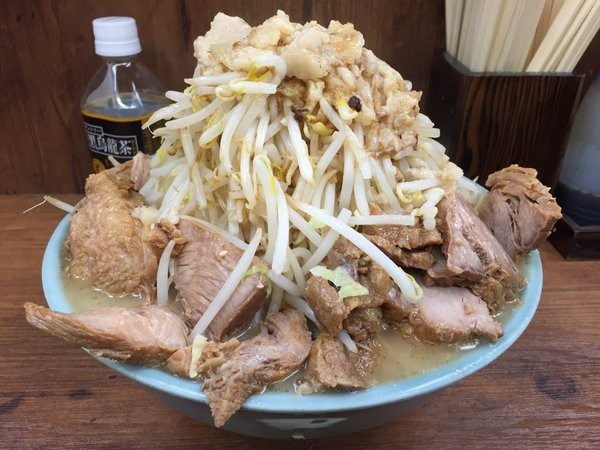
Jiro-kei ramen could be called the real man’s ramen — and why do I say that? Because every single bowl of Jiro-kei is so packed that one person can’t finish it, and every bowl has to be piled up as high as a mountain before they’ll call it done. Jiro-kei ramen has the following defining traits:
- The portions are huge — a single bowl usually runs between 150 and 600 grams of noodles (an ordinary bowl of ramen is about 60–100 grams)
- The toppings are mostly bean sprouts, garlic, chashu, and pork back fat
- Extra portions of toppings are all free
- The broth is usually a thick, rich tonkotsu-shoyu base
- Jiro-kei ramen isn’t a type of ramen — it’s a sacred food called “Jiro”
The first time I encountered Jiro-kei ramen, I was floored by that mountain of bean sprouts towering over the bowl. For me, Jiro-kei ramen has always been my absolute favorite. The very earliest Jiro-kei ramen can be traced back to “Ramen Jiro,” a famous shop near Keio University’s Mita campus. Back then the shop’s whole pitch was a belly-busting heap of bean sprouts, a mountain of cabbage, plus back fat and raw garlic. Just like with the rise of Iekei, it caught on slowly because everyone who finished a bowl thought it was incredible — to the point where it spawned a ton of hardcore Jiro-kei fans.
Among the obsessive Jiro-kei devotees, Jiro ramen isn’t a type of ramen but a sacred food called “Jiro.” On top of that, because you can adjust how much raw garlic, noodles, bean sprouts, and back fat you want, they’ve come up with a whole set of jargon — for example, to ask for more “raw garlic, pork back fat, vegetables,” adding one extra serving is called “mashi,” and doubling it is called “mashimashi.” So, for instance, double the vegetables is “yasai mashi de,” and doubling everything is “zenbu mashimashi de.”
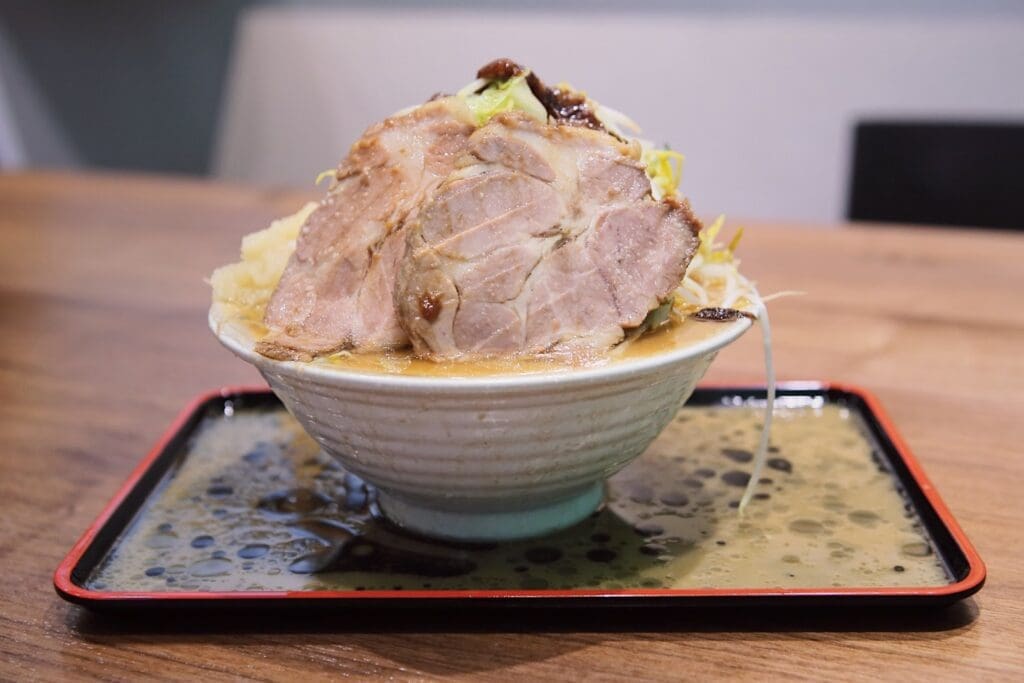
There’s also a fun challenge within the world of Jiro-kei ramen. In the Jiro-kei ecosystem there’s a unique title called “Jirorian” — in other words, a fanatical Jiro fan! To become a true Jiro fanatic, you have to eat at least 3 bowls of Jiro-kei ramen every week before you’re qualified to call yourself one. If you want to eat Jiro-kei ramen in Taiwan, the one most people recommend is the “Ichi no Jiro Ramen” at “Menya Ichi no Ana” in Da’an District, New Taipei — crowned the best-value Jiro-kei ramen in Taipei. As for my personal favorite, it’s still the “Niku Dakudaku SP” at “Takaryu Tokyo Tonkotsu Ramen – Kyokusho.” And if you’re after Jiro-kei ramen in Taichung, I’d recommend the “Kyo Donshan” at “Donshanro.”